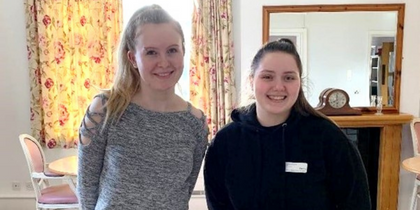
Gloucester House benefits from outstanding student volunteers
This week marks Student Volunteering Week, Gloucester House in Sevenoaks is celebrating the success of their volunteer scheme, which over the years has seen many volunteers continue go on to become permanent team members. Emma Adams and Emily Dixon-Brown, Level 3...
Borovere’s Marathon-Running Manager
Karen Shepperdson, Home Manager of Borovere Care Home in Alton, has once again donned her running shoes and won six medals at Disney World Florida as part of the runDisney marathon weekend. Karen is an avid runner, having completed the London Marathon eight times,...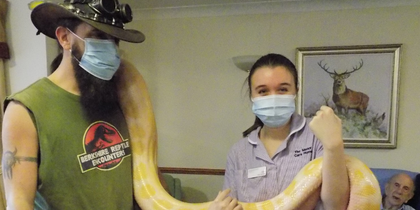
The Manor welcomes reptilian visitors!
The Manor Care Home in Old Windsor had some unusual guests last week thanks to Berkshire Reptile Encounters! The residents of the Greensleeves Care Home met a wide range of reptilian friends, including a blue-tongued skink, a giant tortoise, bearded dragons and of...
100th Birthday Celebrations for The Orchards War Veteran
Freddie Howe, an Ely War Veteran, turned 100 in style on 11th January at The Orchards. Freddie has been local to the Ely area all of his life and moved to The Orchards in August 2020 where he has become a well-loved member of The Orchards family. The centenary...
New Global Standards to Enhance the Quality of Life for Older People
Last week, two new international standards aimed at enhancing the quality of life for older people were approved by ISO (International Standardization Organisation). The standards were unanimously backed following four years of international collaboration with the UK...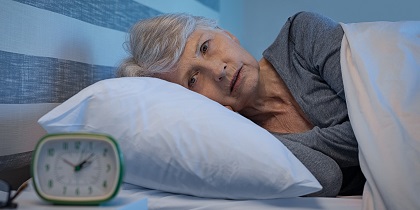
Dementia and sleep
Dementia and sleep – tips for a better night’s sleep Often people living with dementia find it difficult it get a good night’s sleep. This can be very difficult for both the person living with dementia and also their carer. We all know how important sleep is for...
Arden House brings Secret Santa to local food bank
The staff at Arden House Care Home in Leamington Spa were full of Christmas spirit this week as they made a festive donation to their local food bank instead of exchanging gifts. Usually, the entire team at the Greensleeves Care home would exchange Secret Santa gifts,...
New night-time monitoring system for Greensleeves Care homes
Greensleeves Care has implemented Ally, an acoustic monitoring system, into several of its homes. The system uses Artificial Intelligence and sensors to detect residents’ changes in motion when they are alone in their rooms at night, and is designed to reduce the...