
Care at home
Information on how to provide quality care for your loved one living at home.
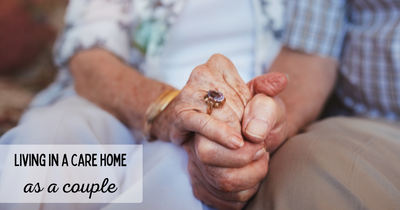
Living in a Care Home as a Couple
At Greensleeves Care, we pride ourselves on making sure that your or your loved one’s transition to one of our homes is as comfortable as possible. We understand that moving into a care home is a significant step, and for many people, one of the hardest parts can be...

Warmth of Care Resources
Warmth Of Care – resources for keeping warm and looking after yourself or an older loved one in winter Age UK- Keeping well this winter Tips on looking after your mental health, information on where to get support with your energy bills and advice on keeping warm in...
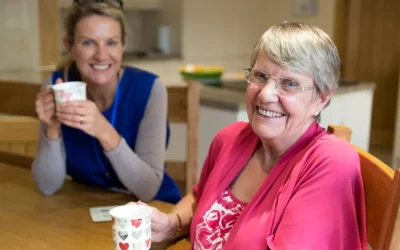
How to tell if your older relative needs more help
Many older people enjoy the comfort of being in their own home. However, sometimes it can become apparent to others that perhaps an older relative or friend is not coping as well at home as they once did. This can be especially true if your loved one is showing early...

What is the care home environment like?
An important thing to remember when considering moving yourself or a loved one into a care home is that care home staff do not see their residents as one homogenous group. That is, each person’s individuality and personality is taken into account when planning their...

What to do after dementia diagnosis
Following any medical diagnosis, you will have a myriad of thoughts running through your head. These will range from feelings such as shock, anger and worry for the future, to more practical considerations such as sorting out your money and letting people know what...

What is domiciliary care?
Domiciliary care is assistance provided to an individual in their own home, who due to age, disability, dementia or any other reason can no longer manage without support. It is provided by visiting carers at different (pre-organised) times of the day and is charged on...
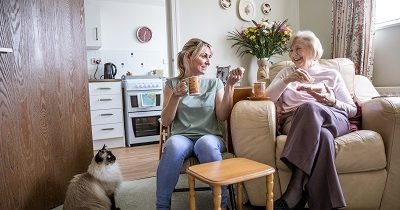
Tips to help you stay safe at home for longer
As people progress on their personal care journey most individuals choose to stay at home if they possibly can. Initially, this might involve family members giving small amounts of care and support to keep things ticking over. Later, as things progress and individuals...

What to do when someone passes away: step by step
Having a loved one pass away is a traumatic time for anybody. Unfortunately, at a time when most people just want to grieve and remember their loved one, there are a number of tasks you will have to carry out. For most people, this event is a fairly uncommon one, so...
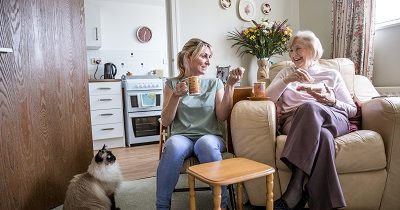
Caring for yourself – advice for families
Many people find caring for a loved one with dementia a rewarding and positive experience, but even the most optimistic of people can find it difficult, both emotionally and physically, from time to time. In the vast majority of cases, the priority is always on the...

Does my loved one have dementia?
How to spot the early signs of dementia and Alzheimer's disease. As the world becomes more aware, and in many cases fearful, of a loved one getting dementia, the more we are all on the lookout for it. But how do we know if a loved one is living with dementia? The only...

How to help an older person with chronic pain
According to a recent study on behalf of the NHS, over 62% of people aged 75 or over are living with long-term chronic pain. The study also stated that over half of adults between 50 and 74 also suffer from chronic pain. What is chronic pain? The term chronic pain...
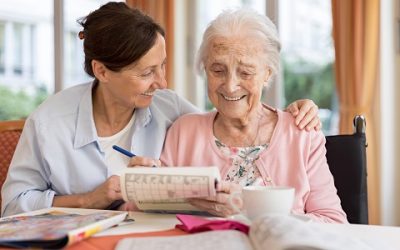
Looking after yourself – advice for live-in carers
It is estimated that in the UK 7,000,000 people are providing long-term care to a loved one. Of these, 1,277,693 are elderly and looking after a spouse or parent. Of these older carers, 65% are living with a disability or a long-term health condition themselves. We...

Who are the Care Quality Commission (CQC)
The Care Quality Commission (CQC) is the independent regulator for all health and adult social care services in England. It is their job to make sure that all care services in the UK are of an appropriate standard. The services that are regulated by the CQC include...
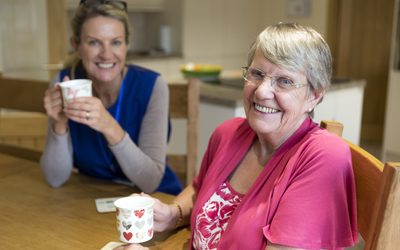
What is 24-Hour Care?
When people need to make decisions about the next stage of their care journey, they have a number of different options available to them. One of those options is 24-hour care, but what does this entail? 24-hour care is support that is available to anyone who needs...

Dementia at night
Many people living with dementia will struggle to maintain a consistent night-time routine. Sleep disturbance is a common side effect, as well as ‘sundowning’ which refers to the worsening of symptoms around the dusk/evening period. The body clock of a person with...

Dementia aids and gadgets
As technology advances, more and more dementia ‘gadgets’ are becoming available. These help people living with dementia to carry out daily tasks with ease. When a person is living in their own home with dementia, it is understandable that friends and family will have...

Staying safer at home for longer
Tips to help you stay safe at home for longer As people progress on their personal care journey most individuals choose to stay at home if they possibly can. Initially, this might involve family members giving small amounts of care and support to keep things ticking...
The importance of exercise for arthritis
Almost all healthcare advice, online or in person, will encourage those living with rheumatoid arthritis to take regular exercise. There is a lot of evidence that keeping active and taking regular exercise can help to ease symptoms of rheumatoid arthritis. It can also...

Home Care for Elderly
Because Greensleeves Care is a charity, founded on the principle of helping older people, we can offer support and guidance without fear or favour. We don’t care about making a profit but we do care about making a difference, so as long as we help nice older people...